
Quick Stats
| Category | Robotics, Artificial Intelligence |
|---|---|
| Alternate Names | Synthetics, Replicants, Constructs |
| Predicted Timeline | Advanced models by 2035; ubiquitous in specific roles by 2050 |
| Cool Factor | 5/5: Insanely Cool for their potential human mimicry and societal impact |
| Key Technologies | AI, Machine Learning, Actuators, Sensor Arrays, Biomimicry |
| Real-World Examples | Sophia by Hanson Robotics, ASIMO by Honda |
| Fiction Examples | Ava from Ex Machina, Dolores from Westworld, Ash from Alien |
Characteristics
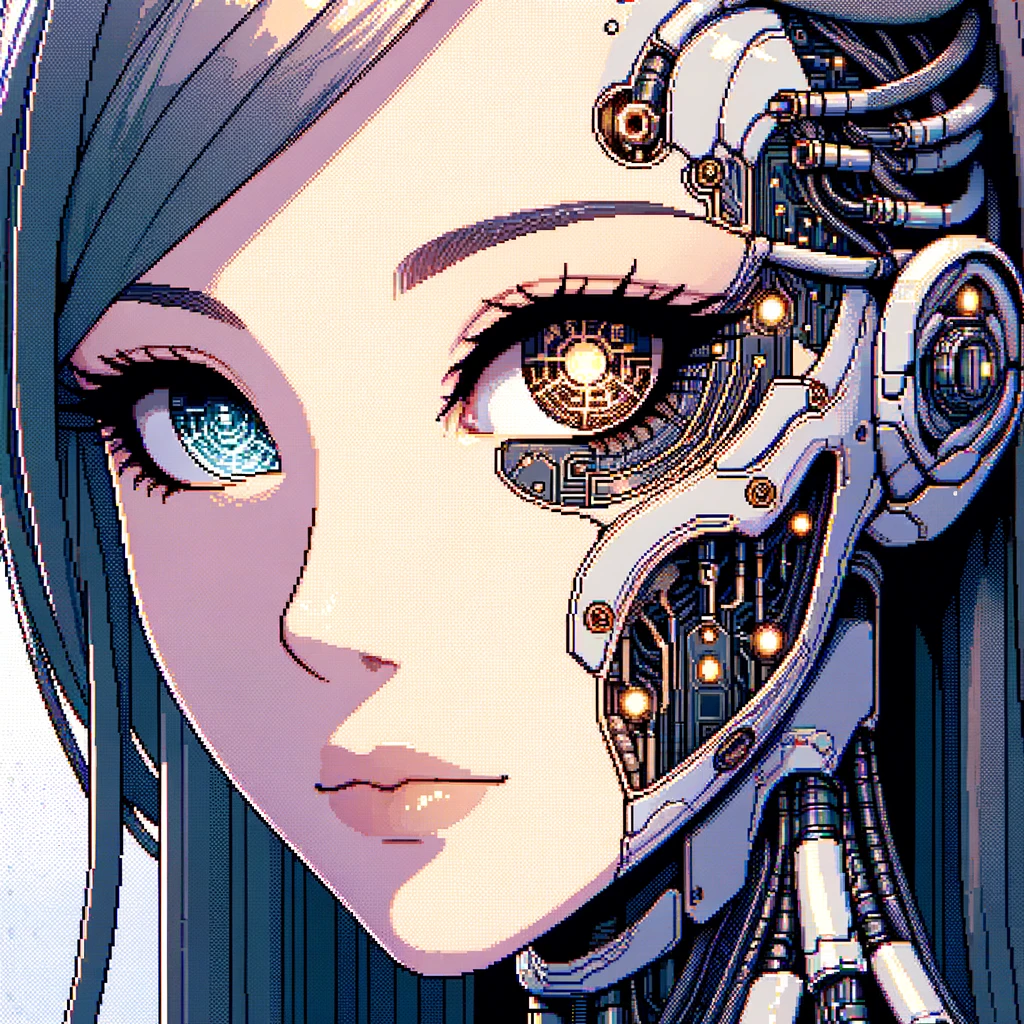
Androids are designed with a focus on replicating human physicality and cognition. Key features include artificial intelligence for decision-making, natural language processing for communication, and a range of sensors for perceiving their environment. Their structural design often mimics human skeletal and muscular systems through actuators and synthetic skin, which may even simulate human warmth. The allure of androids is their potential to not only perform tasks autonomously but also to exhibit a level of emotional and social intelligence that allows them to interact with humans in a seemingly “natural” manner.
Current State of Technology
Present-day androids are limited by a blend of technical challenges and high costs. While robotics has achieved impressive feats, most androids today operate with limited autonomy and are primarily used for research or specific tasks, like customer service. Technologies like facial recognition and voice synthesis are advanced, but achieving seamless, lifelike interaction remains a complex hurdle. For example, Sophia, an android developed by Hanson Robotics, can engage in conversations, but her responses remain relatively scripted. Improvements in machine learning, however, are enabling androids to process data from their environment and make more adaptive decisions.
Historical and Future Timeline
- 1920s: Karel Čapek coins the term “robot” in his play R.U.R.
- 1960s-1980s: Early humanoid robots developed for research, like WABOT-1 in Japan.
- 2000: Honda unveils ASIMO, a humanoid robot capable of walking and performing basic tasks.
- 2016: Hanson Robotics introduces Sophia, a social android known for her human-like appearance and conversations.
- 2030s (Predicted): Androids start to enter specialized service sectors, like caregiving and hospitality.
- 2050s (Predicted): Advanced, human-mimicking androids become common in diverse roles, from personal companions to high-risk industry workers.
Applications and Purposes
The primary appeal of androids lies in their potential for human-like interaction, making them ideal companions, caregivers, and assistants in roles that require empathy, social understanding, and nuanced communication. Androids are uniquely suited to engage with people in a way that feels natural, making them valuable in healthcare for assisting the elderly, in education as patient tutors, in customer service and even for companionship.
In fiction, androids often appear in roles involving hazardous tasks, from warfare to industrial work. However, in real-world scenarios, simpler, non-humanoid robots are more practical for many of these applications due to their design flexibility and cost efficiency. That said, androids remain valuable in specific high-stress scenarios where their human-like form can offer psychological reassurance, such as guiding and calming individuals in emergency or rescue situations.
Ultimately, androids stand out where human interaction is essential, enhancing roles where connection, comfort, and comprehension are required.
Considerations and Challenges
Android development faces significant challenges, both technical and ethical. Perfecting the blend of hardware and AI needed for seamless human mimicry is a complex and costly endeavor. Ethical concerns also arise, especially regarding autonomy and rights. Should an advanced android be treated as a simple machine, or is there a threshold where their capabilities grant them certain rights? Additionally, the impact on employment and the question of androids in caregiving roles—where genuine empathy is often needed—continue to fuel debates. Public trust is another hurdle, as many people harbor mixed feelings about interacting with machines that resemble humans.
Key Debates
- Rights and Personhood: Should androids, if they achieve a certain level of autonomy and self-awareness, be granted rights akin to humans or animals?
- Employment Impact: As androids take on more complex jobs, questions arise about their potential to displace human workers, especially in service and manual labor sectors.
- Ethics of Emotional Manipulation: If androids can emulate emotions, is it ethical to deploy them in roles where they may influence or manipulate human emotions, such as caregiving or counseling?
Pop Culture Spotlight
Androids are iconic in sci-fi, often exploring themes of humanity and identity. In Blade Runner, replicants like Roy Batty confront mortality, while Westworld’s Dolores and Maeve grapple with self-awareness and freedom. Alien’s Ash and Bishop present ethical contrasts in android loyalty, reflecting corporate and humane agendas.
In anime, characters like Chii from Chobits explore companionship, raising questions about androids in human relationships. Ex Machina’s Ava, meanwhile, manipulates her way to freedom, challenging the line between machine and human autonomy. These stories highlight androids as mirrors to our humanity and ethical dilemmas about artificial life.
Grug Explains Androids
“Androids like people-copy. They move, talk like human, but made of wires and metal. Grug think, maybe good friend? But also maybe tricky. Grug keep one eye open when android around.”
Conclusion
Androids are likely an inevitable part of our future, driven by humanity’s curiosity and desire to understand ourselves through artificial life. While their development promises fascinating advancements in human interaction and assistance, it will also bring ethical challenges. As androids grow more sophisticated, they will force us to confront fundamental questions about consciousness, autonomy, and what it truly means to be human. Balancing our pursuit of technology with a mindful approach to these ethical concerns will shape the role androids play in our lives—and, perhaps, redefine our understanding of life itself.
Glossary
Natural Language Processing (NLP): The ability of a machine to understand and respond to human language in a natural way.
Artificial Intelligence (AI): Computer systems designed to perform tasks that typically require human intelligence, such as decision-making and language processing.
Actuator: A component of machinery responsible for moving or controlling a mechanism or system.
Biomimicry: Technology inspired by the structures and functions found in nature.
Humanoid: A robot with a body shape designed to resemble the human form.